Upgrading commercial access control is one of the most important security decisions a business can make. As a local security provider serving Yardley and the greater Philadelphia metropolitan area, we help business owners transition from traditional key systems. We implement modern electronic access-control solutions that improve safety, accountability, and operational control.
Key Takeaways
- Commercial access-control systems replace physical keys with electronic credentials that can be issued or revoked instantly without re-keying doors.
- Keycards, mobile credentials, and role-based permissions give Yardley businesses stronger oversight of who enters specific areas and at what times.
- Code compliance under Pennsylvania’s Uniform Construction Code directly affects how access-controlled doors must function during emergencies.
- A successful upgrade begins with a site-specific assessment, a defined credential strategy, and a documented integration plan.
- Ongoing maintenance, software updates, and trained administrators are essential for long-term system performance and security.
Key Access Control Considerations for Yardley Businesses
Every building presents unique risks and operational needs. Security decisions should reflect your layout, occupancy load, and day-to-day workflow.
How Access Control Systems Manage Building Entry
A modern commercial access control system assigns permissions to individual users, logs entry and exit activity, and allows immediate credential deactivation when staffing changes occur. For Yardley offices, medical facilities, warehouses, and professional buildings, this eliminates the cost and uncertainty of lost keys.
It also creates a documented audit trail for management reviews and compliance verification.
According to guidance from the Cybersecurity and Infrastructure Security Agency, layered physical security and controlled entry points are foundational elements of facility protection, particularly for businesses storing sensitive data or high-value inventory.
Types of Credentials and When to Use Them
Commercial access-control systems typically use keycards or fobs, PIN codes, mobile credentials, and biometric authentication. In the Philadelphia metropolitan area, keycard access control remains the most common option because it is cost-effective and simple to administer.
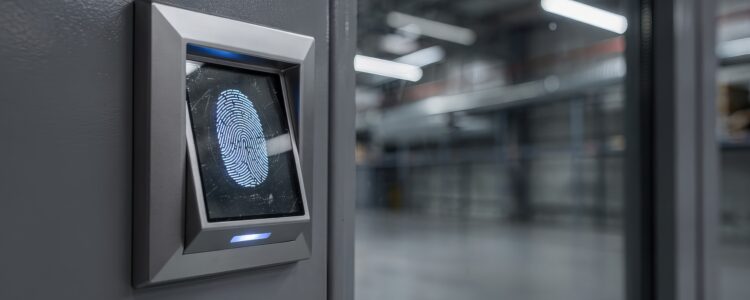
Mobile credentials are increasingly popular for multi-location employers seeking centralized oversight. Biometric readers are typically used in higher-security areas such as IT server rooms or controlled storage spaces. In these environments, identity verification must extend beyond possession of a card.
Fire Code and Egress Requirements in Pennsylvania
Access-controlled doors in Bucks County must comply with Pennsylvania’s Uniform Construction Code. These requirements are based on the International Building Code and life-safety standards from the National Fire Protection Association. Egress doors must allow free exit during emergencies.
Magnetic-lock systems commonly require a fail-safe release tied directly to the fire-alarm system. Hardware selection should always follow a documented code review to ensure occupant safety and inspection approval.
How to Plan a Successful System Upgrade
Careful planning prevents unexpected costs and delays. A structured approach keeps your security upgrade aligned with operations.
Start with a Site Assessment, Not a Product Demo
Selecting hardware before evaluating your facility often leads to change orders and installation complications. A professional site assessment documents door conditions, frame construction, wiring pathways, and fire-alarm integration points. It also evaluates existing business security systems already in place. This process ensures the final design fits your Yardley facility rather than forcing the building to adapt to a pre-packaged solution.
Determine Your Credential Strategy Before Specifying Hardware
Your credential strategy should drive hardware selection. Businesses with frequent staff turnover benefit from proximity cards or mobile credentials because access can be revoked instantly through centralized software. Facilities that manage sensitive records, financial assets, or regulated materials may require dual-authentication methods.
Combining a card with biometric verification adds another layer of identity confirmation and reduces unauthorized access risks.
Plan for Integration, Scalability, and Ongoing Maintenance
Modern commercial building security performs best when systems communicate seamlessly. Access control should integrate with CCTV systems, intrusion detection, and 24/7 UL alarm monitoring services. Integrated platforms allow unauthorized access attempts to trigger video recording and alarm notifications simultaneously.
Planning for scalability is equally important for growing Philadelphia-area businesses that may expand into adjacent suites or additional properties. Budgeting for annual inspections, firmware updates, and administrator training keeps the system secure and operational.
Protect Your Yardley Business With Professional Access Control Installation
Electronic access control is an investment in safety and operational resilience. Professional design and code-compliant installation make the difference.
Upgrading to a modern commercial access-control system strengthens your building’s security posture and improves daily management. B.A.I. Security Systems has provided professional security installation and service throughout Yardley, Pennsylvania, Bucks County, and the greater Philadelphia metropolitan region since 1988.
Our specialists evaluate your facility, design a solution aligned with your workflow, and install it to meet code and performance standards. Contact us to schedule your on-site assessment.
Frequently Asked Questions
What is a commercial access control system?
A commercial access-control system restricts and manages entry to buildings or designated areas using electronic credentials such as keycards, mobile applications, PIN codes, or biometric readers. It replaces physical keys and automatically records access activity for accountability and reporting.
What credentials are most common for commercial door access control?
Keycards and fobs remain the most widely used credentials in commercial settings because they are affordable and easy to manage. Mobile credentials are increasingly adopted, while biometric readers are typically reserved for higher-security interior areas.
Do access control systems need to meet Pennsylvania building codes?
Yes. In Pennsylvania, access-controlled doors must comply with the Uniform Construction Code, especially regarding emergency egress requirements. Many systems must release automatically during a fire-alarm event to ensure occupants can exit without presenting credentials.
Can access control integrate with cameras and alarm systems?
Most modern access-control platforms integrate with CCTV and intrusion-alarm systems. When configured correctly, unauthorized access attempts can trigger camera recordings and alarm notifications, creating a coordinated and time-stamped security response.